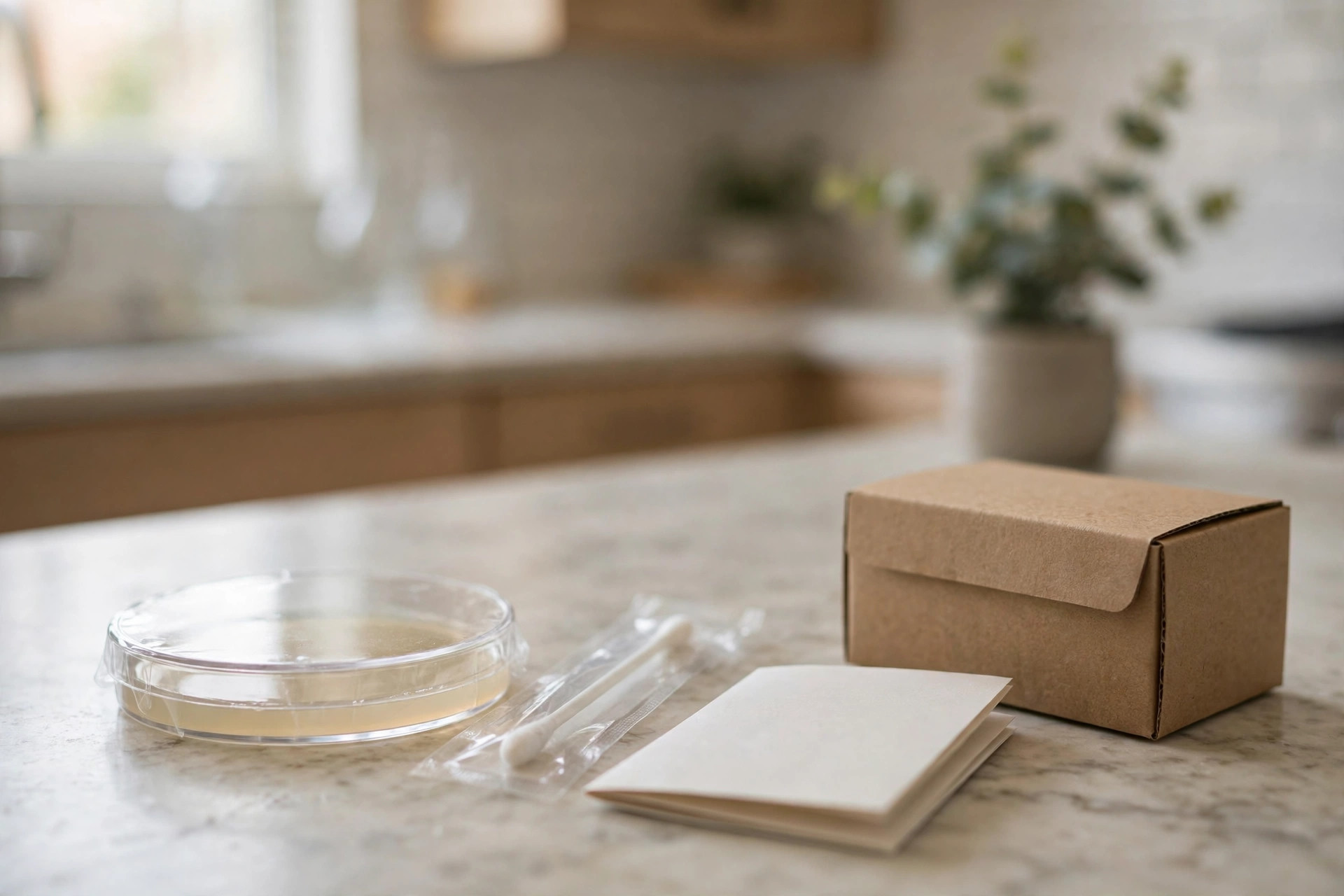
Few things rattle a homebuyer like the words "possible mold" in an inspection report. The good news: a DIY mold test kit, typically $10–$50, can help you turn a vague worry into actual data — which rooms have elevated spore levels, whether that suspicious patch is active growth, and whether the seller's "it was just mildew" story holds water. The bad news: not all kits are created equal, and a $10 petri dish from a big-box store can just as easily manufacture anxiety as information. This guide explains what DIY mold tests can and can't tell you, how to read the results, and which kits are actually worth a buyer's money.
Why buyers test for mold — and when it's worth doing
Mold is a moisture problem wearing a different name. Wherever water lingers — behind a shower surround, under a sink with a slow drip, in a basement with poor drainage — mold eventually follows. For a buyer, mold matters for three reasons: health (some people, especially kids and allergy sufferers, react strongly to certain species), cost (remediation for a contained patch runs hundreds; a whole-crawlspace job runs thousands), and leverage (documented mold gives you something concrete to negotiate on or walk away over).
Testing makes sense in specific situations: the inspection flagged moisture or visible growth, the house smells musty in spots, the basement or crawlspace has a history of water, or someone in your household has mold allergies and you need a cleaner baseline before committing. Testing does not make sense as a fishing expedition in a house with no symptoms — ambient mold spores exist in every home on earth, and a test taken "just to see" will almost always find something, which proves nothing and worries everyone.
One more thing to get straight: a DIY kit is a screening tool, not a diagnosis. It answers "is there something here worth investigating?" — it does not replace a professional mold assessment when the stakes are real, which we'll cover below.
Surface tests vs. air tests: the two kinds of DIY kits
Every home mold kit falls into one of two families, and buyers usually need to understand the difference before spending a dollar.
Surface tests (tape-lift kits, swab kits) sample a specific visible spot: the dark patch under the sink, the fuzzy growth on the basement wall. You press a piece of clear tape or a swab onto the suspect area, seal it, and either incubate it yourself or mail it to a lab. These are the right tool when you can see something and want to know whether it's actually mold — and if so, what kind.
Air tests (settle plates / petri dishes, spore-trap cassettes, pump-based samplers) measure what's floating in the room's air. Petri-dish "settle plates" are the cheap ones: you leave an open dish out for an hour, seal it, wait days for colonies to grow, and eyeball the result. Cassette-based kits pull air through a collection medium and get mailed to a lab for a real spore count. The honest truth: settle plates are the least reliable test in the category — they grow whatever happens to land on them, can't measure concentration, and turn every anxious buyer into an amateur mycologist staring at fuzzy dots. If you want air data you can act on, a lab-analyzed cassette is in a different league.
What to look for in a mold test kit
Lab analysis included. This is the single biggest quality divider. A kit with accredited lab analysis returns species identification and spore counts — real numbers. A kit without it returns a dish of fuzz and a shrug. Lab fees are usually baked into the kit price or paid when you mail the sample; either way, prefer kits that end at a lab.
Sampling method matched to your question. Visible spot → surface kit. Musty room with no visible growth → air cassette. Whole-house screening before closing → one air cassette per suspect room plus an outdoor control sample (the outdoor sample is how labs calibrate what's "normal" for the area).
Clear result interpretation. Good kits return results with plain-English context: what species were found, how the indoor counts compare to the outdoor control, and whether the pattern suggests an indoor source. Avoid kits whose "report" is just a spore count with no interpretation.
Fast turnaround. During a 10-day inspection contingency, a kit with a 2-week lab turnaround is useless. Check stated turnaround times before buying — 3–5 business days from lab receipt is typical for decent services.
The picks: best mold test kits for homebuyers
We compared specs across the kit types buyers actually use — sampling method, lab quality, turnaround, and cost per sample. Every pick below is suited to a buyer's specific question, not a professional remediator's workflow. Prices move; check current listings.
Best overall: lab-analyzed air cassette kit
An air cassette mold test kit with professional lab analysis is the best single purchase for a buyer. You set the cassette in the suspect room for a set sampling period, mail it in, and get back species identification plus spore counts compared against an outdoor control. That comparison — indoor vs. outdoor — is what separates "there's mold in the air, which is true of every house" from "there's an indoor source amplifying spores in this room." Expect $30–$50 per cassette including lab fees, and run at least one outdoor control alongside your indoor samples.
- Pros: real spore counts and species ID from an accredited lab; indoor/outdoor comparison actually answers the buyer's question; no incubation or guesswork on your end
- Pros: documents findings in a report you can hand to your inspector or use in negotiation
- Cons: lab turnaround (typically 3–7 business days) can strain a short inspection contingency
- Cons: per-sample cost adds up fast if you're testing four rooms plus a control
Best budget: petri-dish settle plate kit
A petri-dish mold test kit is the $10–$15 option: leave the dish open in the room for an hour, seal it, and watch what grows over several days. It's cheap and simple, and it can confirm that a room has a lot of viable spores landing — but it can't measure concentration, can't identify species, and will grow mold from any normal home. Use it as a rough screen, never as evidence for a negotiation.
- Pros: cheapest way to get a rough sense of spore activity in a room; no lab fees, no mailing
- Pros: simple enough to run in a house you don't own yet (no equipment, no noise)
- Cons: no species ID and no concentration data — the results are qualitative at best
- Cons: prone to false alarms; a "positive" dish proves almost nothing on its own
Best for visible spots: tape-lift surface kit
When there's a visible patch — under the sink, on the basement wall, around a window — a tape-lift mold test kit answers the direct question: is this mold, and what species? You press the included slide or tape onto the growth, seal it, and mail it to the lab. This is the most targeted test in the category and the cheapest way to get lab-confirmed identification of a specific spot the inspector flagged.
- Pros: directly identifies the suspicious patch the inspection flagged — no guessing
- Pros: lab analysis is usually included and affordable ($15–$30 per sample)
- Cons: tells you nothing about rooms with no visible growth
- Cons: sampling technique matters — press too hard or sample a dead/dusty area and results skew
Best for musty HVAC or whole-room screening: pump air-sampling kit
A pump-based mold air sampling kit draws a measured volume of air through a collection cassette, which gives the lab a real concentration (spores per cubic meter) instead of a settle plate's "some stuff landed." It's the closest a DIY kit gets to professional methodology, and it's the right call when a room smells musty but shows no visible growth, or when you suspect the HVAC is distributing spores.
- Pros: measured air volume means real concentration data — the most defensible DIY result
- Pros: best option for musty-smelling rooms with no visible source
- Cons: the pump adds cost ($60–$120 for the kit) and it's noisier and more conspicuous to run
- Cons: still requires an outdoor control sample for the results to mean anything
Reading your results without panicking
Lab reports list species names that sound terrifying — Stachybotrys, Aspergillus, Penicillium — but context is everything. These genera exist in outdoor air everywhere; what matters is whether indoor counts are significantly higher than the outdoor control, and whether the indoor mix is dominated by species associated with water damage (like Stachybotrys or Chaetomium) rather than the normal outdoor background.
A useful rule of thumb from indoor-air professionals: indoor spore counts roughly in line with the outdoor control, with a similar species mix, is a normal result — even if the absolute numbers look big. Indoor counts multiples higher than outdoors, or an indoor profile dominated by water-indicator species, means there's likely an active indoor source. That's the result worth handing to your inspector and, if needed, a mold assessor.
And remember what the kit can't tell you: where the moisture is coming from, how far growth extends behind walls, or what remediation will cost. The test finds the smoke; finding the fire is the inspector's and the specialist's job.
When DIY isn't enough: call a professional
Bring in a licensed mold assessor (not a remediator — you want the diagnosis separated from the sales pitch) when: the inspection found widespread visible growth, there's a strong musty odor with no visible source, someone in the household has serious mold-related health issues, or your DIY results show a clear indoor amplification pattern. A professional assessment with proper air sampling, moisture mapping, and a written protocol typically runs $300–$600 — cheap insurance against a five-figure remediation surprise, and the report carries weight in negotiations that a DIY kit never will.
One caution: in several states, including Florida, mold assessment and mold remediation must be performed by separately licensed companies — a firm can't both diagnose and sell you the cleanup. That's a consumer protection worth knowing about before you hire anyone.
Our verdict
For most homebuyers, the smart money is a lab-analyzed air cassette kit for each suspect room plus one outdoor control — it's the only DIY option that returns numbers you can actually reason about. Add a tape-lift kit for any specific spot the inspection flagged. Skip the settle-plate petri dishes unless you just want a cheap rough screen; they're better at generating worry than information. And whatever the kits find, remember the hierarchy: the test screens, the inspector investigates, and the licensed assessor diagnoses. Keep that order and a mold finding stays a manageable line item instead of a deal-killer. For the bigger picture on what inspectors flag beyond mold, see our mold guide for homebuyers and home inspection 101.
Frequently asked questions
Can a mold test kit tell me if mold is dangerous?
No kit can assess health risk — that depends on the species, the concentration, the duration of exposure, and the individual. Kits identify what's present and how much; interpreting health implications is a job for a medical professional, especially for children, the elderly, or anyone with asthma or immune issues.
How long does lab analysis take?
Typically 3–7 business days from when the lab receives your sample, with rush options sometimes available. During a short inspection contingency, order the kit the day the inspection is scheduled so sampling and shipping don't eat your whole window.
Should I test before or after the home inspection?
After, in most cases. The inspection tells you where to test — the moisture-stained basement corner, the musty guest bath — which makes your samples targeted instead of random. Random testing of a house with no symptoms mostly produces noise.
Will the seller let me run mold tests during the inspection period?
Air cassettes and tape lifts are non-invasive and most sellers won't object, especially if your contract's inspection contingency covers testing. Mention it to your agent so it can be coordinated with the listing side — surprises erode goodwill you may need later in negotiation.
What's the difference between mold and mildew?
Mildew is a superficial, usually powdery growth on surfaces (think shower grout) that cleans off easily. Mold penetrates porous materials and signals a moisture problem worth investigating. A tape-lift kit can confirm which one you're looking at if it matters for the negotiation.